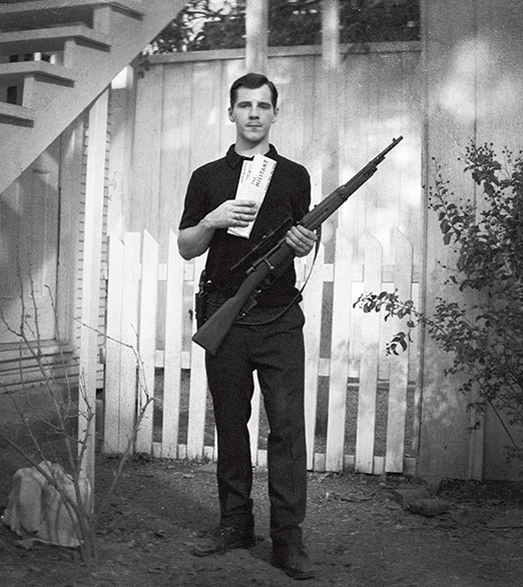
Lee Harvey Oswald

Lee Harvey Oswald
Lee Harvey Oswald

Lee Harvey Oswald (1939–1963) has been U.S. “Public Enemy #1” ever since his posthumous conviction in the court of popular opinion for the assassination of President John F. Kennedy in 1963. For most people, his supposed acts in Dallas on 22 November 1963 remain the single most memorable event of Oswald’s short life.

Nevertheless, the facts and enigmas of his twenty-four years have inspired as much scholarly debate and public controversy as any number of longer-lived, more colorful and influential U.S. antiheroes such as J. Edgar Hoover, Jimmy Hoffa, or Richard Nixon.

To this day, there is no firm consensus regarding his actions in those fateful hours or the circumstances leading to them, although in recent years the balance of popular and scholarly opinion has begun to favor the theory that he was involved—perhaps unwittingly—in some kind of conspiracy to assassinate the president.

From Communist Novice to U.S. Marine


Born on 18 November 1939 in a downtrodden neighborhood of New Orleans, Louisiana, Oswald had a family life that was, by any standards, unsettled. Although his father’s early death meant that Lee’s childhood was, like that of many youngsters born during the war, dominated by his mother, it is fair to say that Marguerite Oswald was a remarkable character.

A succession of relationships and family connections with figures on the fringes of organized crime have proven fertile ground for conspiracy researchers like Anthony Summers and Peter Dale Scott, who have often depicted these connections as the source of Lee’s own involvement with the Mafia and other groups during his later years. Certainly, the family’s poverty and rootless wanderings across the Deep South and the Bronx seem to have acted as a catalyst in the young man’s political education.

By the age of sixteen, already a frequent truant and briefly an inmate of the Bronx’s Youth House correctional institute, Oswald had begun to describe himself as a Communist. He claimed to have been won over to the beleaguered U.S. Left by the plight of the Rosenbergs, whose ongoing court case brought about a short-lived revival of the Communist Party’s fortunes in the early 1950s.

From his own fascinating but still unpublished writings, and the hundreds of pages of testimony given during the official inquiry into Kennedy’s death, the picture emerges of a hostile, potentially violent and impressionable youngster who was inflamed by the lurid rhetoric of the Left and turned to the uncompromising radicalism of the Communist movement at the height of McCarthyism.

Borne out by contemporary school reports, and lent credence by the careers of other leftists and political assassins like Leon Czolgosz, killer of President McKinley in 1901, this became the standard narrative of Oswald’s early years.

However, the interpretation of Oswald as a loner has not convinced everyone. In some accounts he emerges as a typical teenager, prone to scrapping with his peers and voicing extreme opinions maybe, but hardly a callous agent of U.S. communism steeling himself for a final conflict with the U.S. establishment.

For one thing, Oswald never actually joined either the Communist Party (CPUSA) or any of the other leftist groups like the Socialist Workers Party (SWP) with whom he frequently corresponded. Even more significant, in 1956, having left school the previous year, he enlisted with that bastion of U.S. neoimperialism, the U.S. Marine Corps (USMC).

Early scores from aptitude tests and other assessments of his conduct and proficiency taken during his military service all reveal a slightly below-average performer. For obvious reasons, his ability with a rifle has long been the subject of fierce controversy on which the most that can be said with any certainty is that, while not an exceptional marksman, he was far from the worst in his unit.

That he could have accomplished the fatal, once-in-a-lifetime result in Dealey Plaza was asserted first by the Warren Commission following lengthy ballistics tests, and is a conclusion recently bolstered by computer assessments performed for Gerald Posner’s 1993 book, Case Closed.

For many other authors, however, the extraordinary, almost superhuman performance Oswald would have needed to achieve on the day, together with analysis of the wounds on the president’s body, is enough in itself to imply the presence of a much larger team of gunmen installed in various positions around the Plaza, and therefore, by definition, a conspiratorial interpretation of the event.

Certainly, Oswald’s military career was unorthodox, and this period has been subjected to increasing scrutiny by conspiracy theorists. He seems to have made no secret of his Marxist leanings and indeed continued to learn Russian and subscribe to Pravda, facts that undoubtedly marked him out as highly suspect among fellow marines in the midst of the cold war.

No less anomalous were his bizarre assignations with members of the local leftist and criminal underworld while on maneuvers in the South China Sea. For Edward Epstein, one of the pioneers of Kennedy assassination conspiracy theory, these mysterious connections, coupled with his training in sensitive radar-control techniques as part of the U-2 spy plane program, point toward the presence of intelligence communities on one side or other of the Iron Curtain influencing his actions.

Recently, following Epstein, other writers, including Anthony Summers and former army intelligence officer John Newman, have explored the possibility that Oswald may have been recruited by U.S. military intelligence to work as a “deep cover” agent in the Soviet Union.

This is one of the theories dramatized in Oliver Stone’s controversial movie JFK (1992), itself based on the writings of Jim Garrison and Jim Marrs, and it certainly provides a plausible explanation for the wealth of unanswered questions in the standard narrative of Oswald’s military service established by the Warren Commission.

Oswald’s Russian Years

In spite of their suspicions of his left-wing interests and tendencies, few of Oswald’s fellow marines could have predicted his dramatic next move. In the summer of 1959, after his discharge from the USMC, Oswald began to set in train a complicated plan that would result in his defection to and residence in the then Soviet Union. This act—impressive in itself given his youth—has, like every other aspect of his life, been scrutinized for evidence of the hidden hand of possible agents of conspiracy.

And for good reason: on 31 October 1959, he presented himself to the U.S. Embassy in Moscow, saying that not only did he wish to renounce his American citizenship, but that he also planned to furnish Soviet intelligence with the military secrets he had learned during his training in the U-2 program.

After several months of unhappy isolation in the Metropole Hotel in Moscow, during which he met future biographer and suspected CIA agent—Priscilla McMillan, and even attempted suicide, Oswald was finally sent on a “Stateless Persons Identity Document” to the industrial city of Minsk, in the province of Belorussia.

That Minsk was located near an espionage training school, and that he was supported by a Soviet government allowance that amounted to a small fortune in the Soviet Union, has led some commentators to speculate that he may indeed have passed intelligence to his hosts, in return for which he was given the “red carpet” treatment.

In any event, Oswald would remain in the Soviet Union for around three years, working in the Belorussian radio and television factory and socializing with some decidedly suspicious members of Minsk society.

When, in April 1961, he married a young student named Marina Prusakova—whose own family background is thought to have been tainted by her stepfather’s involvement in Stalin’s purges of the 1930s and 1940s—it seems that the weight of Soviet intelligence and surveillance was brought to bear on the American defector.

Certainly, the couple’s every conversation in their relatively luxurious apartment overlooking the Svisloch River was now recorded and monitored by local KGB agents. Whether or not this was because Oswald represented a valuable intelligence source and potential agent or was merely an asset in the cold war diplomatic chess game remains unclear.

However, the balance of evidence from sources such as the frequently unreliable Soviet defector Yuri Nosenko and Norman Mailer’s extensive research for his book Oswald’s Tale (1995) now suggests that, after their initial interest in Oswald, the KGB quickly lost faith in his value as a potential operative.

In spite of the circumstances of his defection, Oswald soon grew disillusioned with life in the Soviet Union. To judge from the large and compelling body of essays, diaries, and letters he produced during his time in Minsk, it is clear that, like many other ideological defectors, he was most distressed by the gap between Communist rhetoric and Soviet realities, and by the regimented, repressive conditions inside Khrushchev’s empire.

In fact, at around the same time as he met Marina, Oswald had reopened negotiations with the U.S. Embassy. There followed well over a year of diplomatic wrangling, including several dangerous, illegal visits to Moscow and hostile KGB interrogations of his wife.

Lee Harvey Oswald with his wife, Marina, and their son, June

Finally, early in 1962, Lee secured exit visas for himself and his family. For some conspiracy critics like Anthony Summers and Jim Marrs, the progress of the Oswalds’ return to the United States appears to have been far too smooth, especially given Lee’s record of anti-American statements and actions.

Likewise, the departure of Marina and their baby daughter June seems to have been achieved with a striking lack of the usual Soviet bureaucratic obstruction. Having said all that, according to some of Posner’s and Mailer’s intelligence sources, the Soviets may simply have been glad to see the back of this troublesome family.

On balance, it seems that, just like in the United States during his teenage years, Oswald had proved unable to keep his criticism of the Soviet regime to himself and had made many powerful enemies in the Soviet Union.

Oswald the New Leftist?

Oswald spent his last eighteen months in the southern cities of New Orleans and Dallas. During this period, according to the story established by the Warren Commission, he gave every sign of seeking to create for himself a reputation as a dynamic and forceful radical.

In these months, he was in regular contact with several of the remaining parties of the U.S. Left, including the CPUSA and the SWP, as well as parties of the “New Left” such as the Fair Play for Cuba Committee (FPCC), which, due to the rise of Fidel Castro’s socialist regime, could claim scores of powerful supporters in the early 1960s.

In addition to the various series of correspondence between Oswald and the leaders of these parties, many of which are contained among the Hearings and Exhibits of the Warren Commission and make fascinating reading, there are also several texts— apparently written for his wife in the event of his imprisonment—in which Oswald apparently seeks to justify an assassination attempt on Major General Edwin Walker.

As one of the South’s most aggressive segregationists and John Birch Society leaders—and, ironically, an enemy of Attorney General Robert Kennedy—Walker was certainly a natural target for a leftist, especially one like Oswald, who is remembered at this time as being an outspoken advocate of desegregation.

That Oswald confessed to his wife and others to having taken a shot at the general in April 1963 was, for obvious reasons, seized upon by the Warren Commission as evidence of an existing propensity to act out his leftist beliefs in a violent and potentially murderous way.

And yet, as with every other event in his life, the circumstances of Oswald’s attempt on Walker’s life become more mysterious the more scrutiny is paid them. Indeed, in these confusing last months, Oswald’s actions seem to have become even less comprehensible and more subject to debate.

As the House Select Committee on Assassinations found during their reinvestigation of the case in the late 1970s, there is evidence to suggest that Oswald was not alone outside Walker’s house on the night of the shooting, and that he may well have attended several of the right-wing extremist’s rallies and meetings in the months thereafter.

Such suspicions, fleshed out by later conspiracy critics like Anthony Summers, raise the contentious but central question of the nature of Oswald’s political affiliations, and how they may have run contrary to his stated opinions at this time.

If relations with his wife abruptly deteriorated after their arrival in the United States, then Oswald was certainly consorting with a bizarre cast of radicals and activists of both Left and Right. One of these obscure figures was George de Mohrenshildt, a shadowy Russian exile and flamboyant businessman with provocative connections in the worlds of U.S. intelligence and organized crime in the United States and Latin America.

According to Norman Mailer’s account of the strange friendship that developed between the two men, de Mohrenshildt was most likely a CIA contract agent charged with the task of debriefing Oswald about his experiences behind the Iron Curtain. However, this may well have been only half the story.

For Peter Dale Scott, the same person was instrumental in embroiling Oswald in what the author describes as the “deep politics” of “gray alliance” between active elements of the intelligence, Mafia, corporate, and extremist political communities in the southern states.

Certainly, there was more to Oswald’s relationship with de Mohrenshildt than the Warren Commission were prepared to concede in their report, in spite of the unsettling evidence to the contrary that they suppressed when it was published in 1964.

Much of this evidence, and indeed the most continually perplexing aspect of Oswald’s life as a whole, concerns his involvement in the complicated politics of Cuban-American relations throughout his last eighteen months.

On the face of it, the stories of Oswald single-handedly establishing a cell of the FPCC in the hostile environs of New Orleans would seem in keeping with the Warren Commission’s narrative of a radical activist growing increasingly dissatisfied with the parties of the Old Left, and searching for an alternative model in the politics of Third World revolution.

Certainly someone, if not Oswald himself, seems to have been careful to create a convincing paper trail indicating the presence of such a figure, including extensive correspondence with Vincent Lee, then general secretary of the FPCC, appearances in the New Orleans news media, and even a trip to Mexico City, ostensibly to present himself as a potential defector to the Cuban Embassy.

And yet now, after many years of research into just this aspect of the case, there exists a substantial body of evidence to suggest that Oswald’s connections and activities at this time were far less straight-forward. For one thing, according to many accounts, he appears to have been in contact with both proand anti-Castro forces massing in New Orleans and other cities in 1962–1963.

While he undoubtedly was in touch with members of the FPCC and other groups, it also appears that Oswald was working—perhaps as a double agent—with a much larger group of anti-Castro Cuban exiles then being coordinated by the CIA and financed by their allies in the national organized-crime network.

It is for this reason that his name has been plausibly linked with a range of key players in the underground world of deep politics, including Mafia generals and footmen such as Santos Trafficante, Sam Giancana, John Roselli, and his own future killer Jack Ruby; rogue CIA contract agents like George de Mohrenshildt, David Ferrie, and Guy Bannister; and renowned local Cuban exile leaders like Carlos Bringuier and Antonio Veciana, who had links with both.

Although they characteristically use these various suspicious connections as a way of exploring the much larger question of the possible nature of a JFK assassination conspiracy rather than clarifying Oswald’s precise role in such a conspiracy, the work of authors such as Anthony Summers, Peter Dale Scott, and Jim Marrs has served to debunk the Warren Commission’s central conclusion that Oswald acted throughout his life as a “lone agent.”

Oswald’s Death

Oswald’s own death, no less than that of President Kennedy, remains shrouded in mystery. According to the official record of marathon interrogation sessions conducted by the combined forces of the Dallas Police Department, FBI, and the Secret Service between 22 and 24 November 1963, Oswald was initially arrested for the shooting of Patrolman J. D. Tippit during his supposed getaway dash from Dealey Plaza.

Within twelve hours, he had also been charged with President Kennedy’s murder. In all that time, he remained unrepresented by legal counsel, in spite of repeated calls to renowned left-wing lawyer John Abt.

If the legal profession apparently distanced itself from Oswald, the international press corps were an almost constant presence; according to one contemporary estimate, over 300 representatives of the news media descended on the Dallas Police Department, creating a media circus.

In a remarkably short time, a detailed account of Oswald’s defection and leftist career had emerged, presumably from the FBI, who had long maintained a file on him, and had been fed to the waiting press.

Oswald’s “fifteen minutes of fame” came to an abrupt end, however, on the morning of Sunday, 24 November, when, en route to Captain J. Will Fritz’s office for a further round of questioning, he was shot dead by local club-owner and small-time mafioso Jack Ruby.

Ruby about to shoot Oswald who is being escorted by Dallas police.

Ever since his death, there have been many who have maintained that the official record of that dark and chaotic weekend was woefully inadequate. For some, Ruby’s sudden appearance among the police officials and newsmen at precisely the moment Oswald emerged from his temporary jail cell leaves the strong suspicion that the killer was forewarned by someone on the inside.

This has led some authors to explore Ruby’s links with corrupt elements within the Dallas law-enforcement community. No less significant is the possibility that Oswald may have known both Tippit, whose involvement in several right-wing enclaves has long been suspected, and Jack Ruby.

For the 1979 Assassinations Committee, such suspicions aligned with their conclusion that, if there was a conspiracy to kill the president, it was undoubtedly instigated by the Mafia in collaboration with extreme right-wing elements, both of which would have had a vested interest in silencing Oswald soon after his arraignment for the murder.

Oswald’s Disputed Legacy

In the forty years since his death, Oswald’s reputation and the meaning of his actions and possible affiliations have played a central role in our comprehension of the Kennedy assassination.

Over the years, he has been seen as an archetypal psychopath or “lone gunman” with delusions of political agency, and as a scapegoat or “patsy” for the larger machinations of secret, unaccountable branches of the socalled shadow government like the FBI, the CIA, and the Mafia.

Between those two extremes, Oswald was briefly reclaimed in the late 1960s by the Weathermen, a terrorist offshoot of the Black Panther Party, some of whose members cited him as a role model of direct action and carried his iconic image on their posters.

More recently, reflecting increasing interest in some of the CIA’s more esoteric operations, several writers have sought to explain Oswald’s paradoxical behavior and radical shifts of allegiance as evincing the influence of covert mind-control and “parapsychological” experiments carried out by the CIA as part of the MK-ULTRA program.

Complementing the research of political and social historians, Oswald’s singular odyssey has also inspired some of the best work by major novelists such as Norman Mailer and Don DeLillo. In DeLillo’s Libra (1988), for instance, the specific nature of Oswald’s involvement in the assassination is left deliberately unresolved, his story told in dramatic counterpoint to the convoluted plans of rogue secret agents and political extremists.

On the other hand, in Mailer’s recent account, Oswald emerges as the culmination of that pantheon of lone agents like D.J. from Why Are We in Vietnam? (1967) and Gary Gilmore in The Executioner’s Song (1979), whose violence and psychoses have long populated the author’s fiction.

Regardless of his culpability or otherwise in the murder of President Kennedy, the figure of the lone gunman, as much the product of the Warren Commission’s influential interpretation of them as of Oswald’s own actions, has become a recurrent character-type in popular media and literary fiction alike, from Robert DeNiro’s Travis Bickle in Taxi Driver (1976) to the villains of recent movies such as In the Line of Fire (1993), Speed (1994), and Seven (1996).

Alan J. Pakula

Alan J. Pakula
Alan J. Pakula

Filmmaker Alan J. Pakula (1928–1998) is best known for his direction of films that have been collectively termed the “paranoia trilogy,” consisting of Klute (1971), The Parallax View (1974), and All the President’s Men (1976).

While these films chart a general trajectory from private to public paranoia and belief in conspiracy, Fredric Jameson states that the trademark of Pakula’s most successful films is that they cut across “the traditional opposition between public and private” (Jameson, 52).

Pakula produced and wrote films and began directing with The Sterile Cuckoo (1969). He later made films such as Sophie’s Choice (1982), the political conspiracy thriller The Pelican Brief (1993), and his final work, The Devil’s Own (1997).

The paranoia trilogy is unified by the cinematography of Gordon Willis, who produced a stark visual representation of paranoia, as well as by a thematic concern with surveillance and the connection between conspiracy and the process of investigation.


Klute details a missing persons investigation in which Bree Daniels (Jane Fonda) is scrutinized by murderer Peter Cable (Charles Cioffi) and private investigator John Klute (Donald Sutherland), and plagued by her own increasing paranoia.

Daniels’s unease can be linked to contemporary social forces, such as the changes initiated by the burgeoning feminist movement. With its recurring use of audiotapes as a visual and aural theme, Klute presciently evokes the social paranoia of the Watergate era, the direct subject matter of All the President’s Men.

Based on the book by Carl Bernstein and Bob Woodward, All the President’s Men follows the investigation of the Watergate burglary as it becomes increasingly linked to the White House. The Nixon administration deceit, manipulation, and paranoia that led to the break-in are replicated by the investigation of journalists Woodward (Robert Redford) and Bernstein (Dustin Hoffman).

But The Parallax View epitomizes the U.S. conspiracy film canon. It invokes the social unease that followed the assassination of John F. Kennedy, the findings of the Warren Commission, and subsequent assassinations.

After the assassination of Senator Charles Carroll (Bill Joyce), reporter Joe Frady (Warren Beatty) uncovers “The Parallax Corporation,” a conspiratorial security company that recruits assassins and “patsies.” The film’s most famous sequence, “The Parallax Test,” is a dazzling montage of images and words that suggests the pervasive interrelation and reach of paranoia and conspiratorial belief that had become prevalent in U.S. society.

Pearl Harbor

Pearl Harbor
Pearl Harbor

On Sunday, 7 December 1941, at 7:55 A.M. the Japanese Imperial Navy launched a surprise attack on the United States Pacific Fleet located in Pearl Harbor, Hawaii. The theories and explanations of the events surrounding the Japanese attack on U.S. forces have become a cottage industry for historians of World War II.

Questions about U.S. military involvement, and theories of how it happened and who knew what and when, reappear with each tenth anniversary. As early as 1942 opponents of President Roosevelt accused him of working to bring the United States into World War II and using the Japanese attack on the United States as an excuse to do just that.

The events surrounding the attack have been subject to multiple interpretations. John Toland, Robert B. Stinnett, James Rusbridger, and Eric Nave have been among those who argued that a conspiracy existed to use an attack on Pearl Harbor to bring the United States into the war and was the real reason for the Japanese success.


Others led by Gordon Prange, Roberta Wohlstetter, and Henry Clausen have argued that it was a series of errors on the part of the United States that gave Japan its opportunity. Since the end of the war, large amounts of information about who knew what have emerged, often providing more smoke than light.

The attack caught a large number of U.S. warships in the harbor. The Japanese sank or damaged eight battleships, two beyond repair. They also damaged three light cruisers, three destroyers, and four other ships beyond repair.

In the U.S. Navy and Marines, 2,086 were killed and 749 wounded, and in the army 194 were killed and 360 wounded. In addition, the United States lost 188 aircraft. Japanese losses were fewer than 100 personnel and 29 aircraft. The event shocked the United States, which had been used to the idea of security within the territories.

The United States and Japan had become significant competitors in Asia prior to the war. U.S. policy in the Pacific during the 1930s and early 1940s was perceived by the Japanese as hostile to their interests in the region. At the same time, Japanese expansion in the region was seen in Washington as hostile to U.S. interests in Asia.

U.S.–Japanese relations were deteriorating throughout 1940–1941 and as the situation became more likely to move to a military solution, U.S. planners foresaw a potential Japanese attack on U.S. interests in the Pacific, especially in the Philippines where the United States had a significant military presence, led by General Douglas MacArthur. The movement of the U.S. Pacific Fleet from San Diego to Hawaii in 1940 was done with a purpose as well. Its placement there was a statement of U.S. interest and intent in the region.

Hawaii was a less secure location than California. There had already been a number of studies showing the possibility of an air attack against Pearl Harbor. The possibility was considered significant enough that on 7 February 1941, General George Marshall (U.S. Army chief of staff) sent Lieutenant General Walter Short (commanding general of the Hawaiian Department) a message informing him that “the risk of sabotage and the risk involved in a surprise raid by air and by submarine constitute the real perils of the situation”.

Then on 5 March 1941 another message from Marshall informed General Short: “I would appreciate your early review of the situation in Hawaiian Department with regard to defense from air attack. The establishment of a satisfactory system of coordinating all means available to this is a matter of first priority”. On 27 November 1941 the commanders in the Pacific were sent what has become known as the “war warning” message.

Marshall’s message cautioned of potential Japanese action “at any moment” and also informed General Short, “Prior to hostile Japanese action, you are directed to undertake such reconnaissance and other measures as you deem necessary”. In the navy message it noted the movement of an “amphibious expedition against either the Philippines, or the Kra Peninsula or possibly Borneo”.

The use of intelligence has been a significant problem in clearing up the questions around the attack. The United States had broken a number of Japanese codes including the “Purple Code” (the highest Japanese diplomatic code) and realized that relations with Japan were deteriorating toward war.

The most famous message intercepted in the last twenty-four hours before the attack was the “Fourteen Part Message,” which was itself of little intelligence value except that it showed the state of U.S.–Japanese relations.

More important was the order setting the time of delivery of the Fourteen Part Message as 1 P.M. in Washington, 7:30 A.M. in Hawaii. General Marshall ordered that the information be communicated to the Pacific commanders by the fastest possible method.

There is a discrepancy in the number of times Marshall was alleged to have sent officers to check on the delivery time, but he is known to have done so at least once. Due to atmospheric conditions the message was sent to Pearl Harbor by telegraph and did not arrive until after the attack on the base.

There were other significant messages, including one from Hawaii to Japan laying out the positions of U.S. ships in the harbor. In December before the attack, the United States had access to information that the Japanese diplomats had been ordered to prepare to destroy their codes.

On 6 December 1941 Colonel Bicknell, the assistant chief of staff, announced to General Short’s staff that “he had received information to the effect that the Japanese counsels were burning their papers .... It would at least show that something was about to happen, somewhere”.

In spite of these successes, it needs to be remembered that the number of codes broken by the United States was limited, as was the completeness of the information about Japanese intentions. Thus, preparations for war were conducted with only partial knowledge.

Another source of concern is the location of aircraft carriers. The U.S. Navy’s Pacific aircraft carriers were not present on the day of the attack. The Saratoga was in San Diego, while the other two U.S. carriers were off to reenforce forward bases with aircraft.

The USS Enterprise had gone to Wake Island and was scheduled back to Pearl Harbor around 7 A.M. on 7 December, but was held up by bad weather, and the USS Lexington was on its way to Midway Island.

The Enterprise was close enough at the time of the attack that its aircraft were able to make contact with Japanese aircraft. Their missions saved them for use in the important sea battles to come, Coral Sea and Midway.

The Theories

One theory argues that President Roosevelt knew about the coming attack, but was willing to sacrifice the aging battleships in order to give cause to the American people to fight the war. In order to do this, Roosevelt and the military command structure in Washington not only placed the U.S. battleships in harm’s way, they also sent U.S. aircraft carriers away from the site of the attack to protect them.

Then Washington conspired to deny U.S. commanders in the Pacific important intelligence data that would have led them to assign a higher state of alert on 7 December. There is significant circumstantial evidence for this theory, based on the idea that Roosevelt needed a military disaster to enter the war. This theory does not account for the possible impact of an attack on other U.S. forces, or a successful defense against a strong attack on Pearl Harbor.

It also does not account for Roosevelt’s love of the navy, which makes his willingness to sink ships less likely. This theory assumes that Roosevelt and the naval leadership understood that aircraft carriers would dominate the next naval war; the evidence for this idea is limited.

It also assumes that the intelligence clearly pointed to an attack on Pearl Harbor. The challenge when investigating the subject is in separating the information that is meaningful and important from a flood of extraneous information.

As one historian notes: “we failed to anticipate Pearl Harbor not for a want of relevant material, but because of a plethora of irrelevant one”. Without a message specifically stating an attack on a site, an analyst must interpret the message and weigh its value based on what they know about an adversary’s potential and preferences.

It is often easier to see a clear meaning in a message with hindsight. Another variant of this conspiracy argues that the British government knew about the attacks and did not inform the United States in order to force it into the war.

It is based on the existence of both British intercept operations, based on U.S. efforts, and British agents in the regions. The strength of this theory is that the British did have the technology to break the “Purple Code,” which they gained from the United States and from the timely sale of British interests in Asia.

This theory assumes superior British knowledge of Japanese intentions, for which the evidence is weak. And like Roosevelt, Churchill loved the navy. It was unlikely he would risk lives, or potentially the war, by allowing the U.S. Pacific Fleet to be destroyed.

The Conspiracy’s Place in History

There were numerous official investigations of the events around Pearl Harbor from the very beginning. The army and navy each conducted board and individual inquiries, such as the Roberts Commission, the Hart Inquiry, the Army Pearl Harbor Board, the Navy Court of Inquiry, the Clarke Inquiry, the Clausen Investigation, and the Hewitt Inquiry.

In 1946 Congress conducted its own investigation and pulled together all of the previous efforts. There has been renewed interest in events around Pearl Harbor since its fiftieth anniversary in 1991. This has spawned a renewal in many conspiracy theories, but also created a growing interest in understanding the actual events and causes of the events of 7 December 1941.

Pentagon Papers

The Pentagon Papers was a forty-seven-volume Pentagon study into U.S. involvement in Vietnam. It was commissioned by the then secretary of defense, Robert McNamara, in 1967 and it provided an in-depth analysis of events from 1945 to 1968. In effect, it amounted to a genuine “secret history” of the war, exactly the kind of document that conspiracy theorists have always dreamed of finding.

In June 1971, the report became an important political issue once Daniel Ellsberg, a former hawk who had worked for the CIA in Vietnam, leaked it to the press. President Nixon and, especially, his national security advisor, Henry Kissinger, were incensed by the leak and their increased paranoia and determination to “get” Ellsberg started the descent into Watergate.

Nixon was initially relaxed about the leak as the first installment, printed in the New York Times on 13 June 1971, seemed to be an opportunity to embarrass his Democratic opponents. It focused upon Lyndon Johnson’s 1964 presidential election campaign against Barry Goldwater and clearly documented Johnson’s deception over his Vietnam policy.

However, within a few days the leak had turned into a flood as the New York Times started printing pages of top secret cables from the U.S. Embassy in Saigon.


The massive national security violation was clearly damaging the Nixon administration and it could have undermined Kissinger’s secret negotiations with China and North Vietnam. A number of foreign countries were also pressing for action to stop the flow of embarrassing reports about their roles in the war.

The White House responded by starting an FBI investigation and seeking a court injunction against the Times preventing further publication. A federal appeals court agreed to the government’s request but the Washington Post started printing extracts instead.

A different federal appeals court refused to grant an injunction against the Post, and other papers, including the Boston Globe and the Chicago Sun-Times, started printing parts of the report as well. Eventually, a dozen newspapers took part while a Democratic senator, Mike Gravel, started reading the Papers into the Congressional Record.

The Nixon administration pursued the case to the Supreme Court, but on 30 June the justices voted six to three against it. The Court found that the government had failed to justify prior restraints against publication and had hence breached the First Amendment guarantees of press freedom.

Despite the Court’s decision, the government was still able to prosecute Daniel Ellsberg, who had been quickly identified as the source of the leaks. Ellsberg was then an MIT research assistant but he had worked on CIA pacification programs in Vietnam in the 1960s.

He had also worked under Henry Kissinger at both Harvard and in the White House—which further inflamed the national security advisor—before joining the Rand Corporation, where he had photocopied the papers over a number of months.

Kissinger and Nixon became determined to discredit Ellsberg, whose denunciations of them and the war in Vietnam were making him into a peace movement hero. A cheering crowd greeted him when he turned himself in to federal authorities in Boston on 28 June.

A grand jury had already been impaneled to investigate the leaking but the White House prevented full cooperation in order to cover up its previous misdeeds. Ellsberg’s lawyers were told that the government had no wiretap records involving their client but he had been taped fifteen times on one of the secret “Kissinger taps.” These taps were not run through the usual FBI channels and revealing the records of Ellsberg would have divulged the whole secret (and illegal) operation.

Nixon also wanted to connect Ellsberg to a Communist country as this would not only discredit him but would also increase his maximum possible jail sentence. No such link could be found, however, and Nixon was convinced that this was because the FBI wasn’t performing a thorough investigation. (Ellberg’s father-in-law was an old friend of J. Edgar Hoover.)

He therefore ordered a White House investigation that was started by E. Howard Hunt, an ex-CIA man. Nixon also wanted action to prevent further leaks, so a new White House unit, which became known as the Plumbers, was formed involving David Young, Egil Krogh, G. Gordon Liddy, and Hunt.

The unit soon decided that a CIA psychological profile of Ellsberg would greatly help to discredit him. Ellsberg’s psychiatrist had already refused to give his files to the FBI and when the CIA drew up a profile using the Plumbers’ material it was very short and superficial.

The Plumbers, with the approval of the president’s chief domestic advisor, John Ehrlichman, therefore decided to perform a covert operation to retrieve the files. Liddy and Hunt organized it but, despite their men wrecking the psychiatrist’s office, nothing was found.

No further such operations were carried out, but the Plumbers continued to dream up schemes to discredit Ellsberg, including drugging him with LSD. They also persisted in pursuing the CIA profile and were eventually rewarded with an eight-page analysis blaming Ellsberg’s actions upon aggression against his father, the president, and Ellsberg’s psychiatrist.

The CIA profile probably wasn’t used for anything, but the White House did use other material on Ellsberg. An article drawing together the left-wing causes his lawyer had supported was leaked to the press by Nixon’s “hatchet man,” Charles Colson, who later served seven months in jail after pleading guilty to infringing on Ellsberg’s right to a fair trial.

Ellsberg, however, avoided a prison sentence as his trial collapsed in May 1972 in the midst of Watergate. During the trial, Judge Matthew Byrne had been made aware of the “Kissinger taps” and the Plumbers’ break-in, as well as being publicly offered the post of director of the FBI.

The cumulative effect of this government misconduct, he said, offended a sense of justice and, instead of ordering a retrial, he dismissed all of the charges against Ellsberg and his codefendant, Anthony Russo of the Times. Coming just after the resignation of Nixon’s chief aides, H. R. Haldeman and Ehrlichman, the trial’s collapse added to the air of crisis and corruption engulfing the White House.

LSD

LSD
LSD

The hallucinogenic drug lysergic acid diethylamide, or LSD, was discovered by the Sandoz drug and chemical corporation in 1943, and within a few short years both the U.S. military and the newly formed CIA would be investigating the possible strategic value of this extraordinarily powerful new substance.

Since a single dose was merely 100 micrograms or so, 10 kilograms—about the amount that could fit into an agent’s carry-on luggage, for instance—was equivalent to 100 million doses, or enough to incapacitate the entire population of either the United States or the Soviet Union.

Its strategic importance as a weapon was thus all too evident, but the CIA was more interested in its potential as an interrogation aid or even as a possible “mind-control” tool. Leaving the research into large-scale deployment to the military’s chemical and biological warfare (CBW) division, the CIA began an extensive program of testing the drug on individuals.


U.S. intelligence organizations had long been interested in the possibility of mind control. The CIA’s World War II predecessor, the Office of Strategic Services (OSS), had experimented with marijuana as a possible mind-control agent. And Stanley Lovell, head of OSS research and development, looked into the possibility of hypnotizing German prisoners and sending them back to Germany with orders to assassinate Hitler.

Though nothing much came of these efforts, the Communist trials of the late 1940s, which saw political and military officials confessing to treasonous acts they clearly did not commit, convinced the CIA that techniques for radical behavior modification existed and, worse, that the Soviets had developed them first.

With the perceived threat of Soviet mind control looming on the horizon, in 1953 the CIA set up MK-ULTRA, a new project headed by Sidney Gottlieb that was devoted to studying the operational potential of biological and chemical materials (including LSD).

The CIA’s testing of LSD proceeded on two fronts. On the one hand, they decided to make use of as many official medical research organizations as they could, and began funding (often covertly) research on LSD in universities, hospitals, and drug treatment centers. On the other hand, they also decided that they needed unwitting subjects whom they could drug and then observe and even interrogate.

The CIA’s need for unwitting subjects was so intense that agents within project MK-ULTRA agreed that they could slip each other the drug at any time. This policy of unwitting testing produced what has become one of the most publicized events in the project’s history: the LSD-related suicide of Dr. Frank Olson of the Army Chemical Corps’ Special Operations Division (SOD).

Olson had a profoundly negative reaction to the drug, which had been given to him without his knowledge, and Gottlieb, rather than offering Olson proper psychiatric help, sent the disturbed SOD man to one of MK-ULTRA’s own scientists, an immunologist and allergist who had no psychiatric experience.

The MK-ULTRA scientist was unable to salvage the situation, and Gottlieb was forced to cover up the entire incident after Olson jumped through the window of his tenth-floor hotel room. Rather than slowing down the CIA’s experiments with LSD, however, the Olson case merely made them realize that they needed to start using different subjects.

Gottlieb arranged to have “safehouses” set up in New York and San Francisco where LSD was administered to unwitting prostitutes, drug addicts, and small-time criminals (i.e., those who would be least likely to report the CIA agents to the police).

As the agents developed close relationships with the prostitutes, they realized that it was just as easy to pay the women to lure unsuspecting clients back to the safehouse for testing as it was to test the prostitutes themselves.

Furthermore, while they were at it, the CIA operatives decided to use the prostitutes for a variety of explorations into deviant sexual practices that might have future operational value. The prostitutes who participated in what the CIA code-named “Operation Midnight Climax” were paid $100 a night for their work.

In the mid-1970s tales of these covert domestic operations emerged as a result of both investigative reporting and government inquiries such as the Rockefeller Commission in 1975 and the Senate Select Committee on Intelligence in 1977.

The CIA agents’ cavalier approach to drug-testing horrified the public, but the institutional programs they covertly funded were often just as shocking. In Lexington, Kentucky, the director of the Addiction Research Center offered addicts heroin if they “volunteered” for the LSD testing project.

Some patients were kept on LSD for seventy-seven consecutive days. At McGill University in Montreal patients were subjected to extensive “depatterning”—a technique the CIA saw as a possible prelude to mind control—that involved extensive use of LSD, electroshock therapy, and sensory deprivation.

Patients’ LSD-induced ramblings would be recorded on tape, then, later the patients would be injected with more LSD combined with either depressants or stimulants and left alone in a room to listen to their earlier tape.

In the end, the CIA became convinced that LSD would not turn out to be the effective mind-control agent they had hoped it would be. And while they still dreamed of administering it to foreign leaders in order to produce erratic and discrediting behavior (one of Fidel Castro’s cigars was to be coated with the drug), they discontinued the research begun in the 1950s by the time the inquiries of the 1970s had begun (or so they claimed).

In the meantime, LSD had become an important part of the 1960s counterculture, and no doubt this new social significance is the reason why tales of the CIA’s connection to the drug were so endlessly fascinating for the public. (No one seemed to talk quite as much about the CIA’s experiments with Seconal and Dexedrine, for example.)

Assassination of Malcolm X

Malcolm X
Malcolm X

Malcolm X was assassinated on 21 February 1965 at the Audubon Ballroom in Harlem. The subsequent murder trial convicted three men, Talmadge Hayer, Norman 3X Butler, and Thomas 15X Johnson. For most commentators (e.g., Breitman), Malcolm’s death left a number of questions unanswered.

Not only did the trial fail to definitively answer who murdered Malcolm, it also failed to answer who sponsored the assassination. The prosecution team quickly assumed the involvement of the Nation of Islam (NOI), and failed to track leads that did not match their assumptions.

Focused solely on winning the case as they defined it, the prosecution worked with the circumstantial evidence they had without attempting to find hard facts or the real motive behind the assassination. To their discredit, the defense teams shared part of the blame; they failed to introduce evidence or raise questions that would seriously weaken the prosecution’s case.


Proponents of various theories have since attempted to solve some of the questions left unanswered, by positing the involvement of not only the Nation of Islam but also other groups with possible motives and means, including the Harlem Drug Lords, the New York Police Department (NYPD), the CIA, and the FBI.

Harlem Drug Lords Theory

As a staunch and vocal opponent of narcotics, Malcolm often warned audiences against using the “weapon of the white man.” Based largely on the personal recollections of one man (Farmer), this theory claims Malcolm’s assassination was nothing more than a battle over turf, as Harlem drug dealers did not want him driving away customers.

The weakness of this theory lies in the fact that most of the evidence is anecdotal, and that Malcolm’s antidrug beliefs did little to curb drug use in Harlem, which continued to rise steadily in the early 1960s regardless of anything Malcolm said or did.

NYPD Theory

Theorists who believe the police played a direct role in the assassination often cite the issue of the “Second Man” as evidence (Norden). “The Second Man” refers to initial press reports that police arrested two suspects, Hayer and an unnamed individual.

Subsequent stories failed to mention the capture of two individuals, but never corrected the error of the first reports. Proponents of the “Second Man” theory argue that the second individual was actually a police operative, and as soon as the police realized this, all evidence of a second arrest disappeared.

While the unexplained disappearance of the “Second Man” looks suspicious on the surface, others explain it away as a simple error committed by the press trying to meet a story deadline. The “Second Man,” say some, could actually be Hayer himself. One officer arrested Hayer, but this officer gave him over to two other officers for transport.

The press might have questioned the first officer and then the other two officers, unaware that there was in fact only one suspect. Once they realized their error, the press corrected the information in their stories, overlooking the need to note the reason for the correction to their readers.

More compelling is the argument that the police played an important indirect role in allowing the assassination to occur. Although the police claimed to have a special detail of twenty officers guarding Malcolm the day of the assassination, only George Roberts, one of Malcolm’s bodyguards and also an undercover agent, was actually in the ballroom itself.

The rest of the detail were supposedly stationed in other rooms of the building and in the hospital across the street. By keeping such a low profile, none of the officers assigned to the detail was in any position to thwart the assassination attempt.

In fact, the officers credited with capturing and transferring Hayer were not a part of the special detail, but were simply passing through the area at the time. While the police may or may not have been directly responsible for Malcolm’s death, they were clearly negligent in their duties.

CIA Theory

Some have argued that the CIA viewed Malcolm as a major threat to national security interests. In 1964, Malcolm’s travels in Africa sparked the interest of the government, specifically the CIA, who followed Malcolm and kept close tabs on his activities.

One of Malcolm’s objectives while in Africa was to garner the support of the Organization of African Unity (OAU). His attempts to lobby the OAU to pass a resolution strongly condemning the racial policy of the United States ultimately failed, but some suggest these attempts were a serious enough threat for the CIA to eliminate him.

While in Cairo, Malcolm suffered a case of food poisoning and had his stomach pumped in a local hospital. Although no proof exists that the CIA placed poison in his food, speculation surfaced after his death that the CIA might have been involved.

Internal CIA documents since released through the Freedom of Information Act indicate that the CIA had no direct role in any assassination attempts made on Malcolm X. In 1976, the CIA carried out an internal review of its files, and an in-house document dated 30 January 1976 concluded that the CIA only monitored Malcolm’s actions and never assumed any active role to stop him. Theorists question the truthfulness of such internal findings, but some question why the CIA would find it necessary to lie to itself eleven years after Malcolm’s death (Friedly).

FBI Theory

Malcolm X was still in prison when the FBI started its first file on him in 1953. He initially caught their attention when he claimed affiliation with the Communist Party in a letter. Although Malcolm was never a Communist, merely mentioning his involvement was enough for the FBI to monitor him as a security threat. Over the next decade, the FBI would collect thousands of documents in Malcolm’s file.

Under J. Edgar Hoover, the FBI was notoriously against the civil rights movement, which Hoover believed was a front for Communists. The FBI developed different tactics to discredit African American organizations and leaders, eventually beginning the Counterintelligence Program (COINTELPRO) to combat groups it viewed as threats to national security.

Theorists point to two documents that suggest the FBI’s interest in discrediting Malcolm. The first is an internal memo dated 22 January 1969 that takes credit for the split between the Nation of Islam and Malcolm X. Exactly how much influence the FBI had in the split remains unclear, but its role was probably minor.

The second document, dated 4 March 1968, outlined COINTELPRO’s objective to “prevent the rise of a ‘messiah.’” The document confirmed the FBI’s fear that Malcolm might have developed into a messiah figure for the African American community, but using these documents to show the FBI’s involvement in Malcolm’s assassination is highly problematic. No credible evidence exists that the FBI ever did anything more than attempt to discredit Malcolm (Carson).

Nation of Islam Theory

Although Hayer offered a surprise confession during the original trial, he did not indicate motive or identify the names of his coconspirators. His claim that Butler and Johnson played no role in the assassination was ignored. During the trial Hayer denied any affiliation with the Nation of Islam, but once in prison, he resumed his Muslim beliefs.

In late 1977 and early 1978, Hayer offered two sworn affidavits, once again confirming the innocence of Butler and Johnson. With Elijah Muhammad’s death in 1975, Hayer claimed he no longer felt it necessary to hide the identities of his fellow assassins, whom he identified as Brother Benjamin, Leon X, Wilbur X, and William X.

The motive they all shared as NOI members was to silence Malcolm, the man dubbed by the NOI as “the chief hypocrite.” Malcolm threatened to spread not only the news of Muhammad’s adulterous relationships, but also the knowledge of the NOI’s rampant fiscal corruption.

While the best evidence suggests that the NOI had the most plausible motive and was ultimately responsible for Malcolm’s death, no direct proof links the assassination to Elijah Muhammad or anyone higher up in the organization than the men who committed the crime.

What is clear is that the harsh rhetoric used by various members of the NOI, such as statements made by Boston minister Louis X [Farrakhan], created a hostile environment for Malcolm, making his assassination a virtual certainty. Members of the NOI identified Malcolm as the enemy, and could easily infer that killing Malcolm was warranted and would be welcomed.

Skull and Bones Society

Including among its members both President George W. Bush and Monty Burns from The Simpsons, the Skull and Bones may be the most powerful and most mythologized secret society left in the twenty-first century United States.

Known as “the Order” to its initiates and housed in a windowless crypt known as “the Tomb,” the Skull and Bones is the oldest and most prestigious of Yale’s secret societies. Each year since its founding by William H. Russell and Alphonso Taft in 1832, fifteen juniors are selected, or “tapped,” to become members in their senior year.

Given its almost frighteningly elite honor roll of members, and its long trail of rumors and exposés, the Skull and Bones has been said to run everything from the Bavarian Illuminati and the New World Order, to the CIA and the East Coast establishment.

But whatever conspiratorial designs one wishes to believe about this quite real secret society, the Skull and Bones has long fulfilled its critical role of, in Ron Rosenbaum’s words, “converting the idle progeny of the ruling class into morally serious leaders of the establishment.”


Secrets of “the Order”

It is said that members are required to leave the room if they are ever asked about the Skull and Bones. Nevertheless, lists of its most illustrious members are readily available. They include political leaders such as the only president to become chief justice of the Supreme Court, William Howard Taft; Franklin D. Roosevelt’s secretary of war, Henry Lewis Stimson; and three members of the Bush clan: Prescott, George, Sr., and George W. Bush.

Yale has long been the center of CIA recruitment, and a large segment of America’s foreign policy and intelligence establishment has been shaped by Bonesmen, including Kennedy’s national security advisor McGeorge Bundy and his brother William, who was a leader of both the CIA and the Council on Foreign Relations; Hugh Cunningham, former director of Clandestine Services for the CIA; and Dino Pionzio, the CIA station chief in Chile during the overthrow of Salvador Allende. Skull and Bones members continue to be connected to every “insider” and potentially sinister international society, including the Bilderberg group and the Trilateral Commission.

In the world of business, the Skull and Bones not only operates several major investment and law firms including Brown Brothers Harriman, but their members include Averell Harriman, Dean Witter, Harold Stanley, and Thomas Daniels, founder of ADM (a large agricultural company). Other prominent Bonesmen include TimeLife founder and media tycoon Henry Luce and conservative pundit William F. Buckley.

Although its membership has been overwhelmingly of a WASP-Republican type, the Skull and Bones was openminded enough to tap its first African American member in 1949; its first Jewish members in the 1950s; and includes among its members the gay, socialist literary critic F. O. Mathiessen, anti-Vietnam activist William Sloane Coffin, and novelist John Hersey (author of Hiroshima and The Conspiracy).

The rites of membership are among the Skull and Bones’ most coveted secrets. It remains largely a matter of conjecture whether or not the tapped are forced to lie naked in a coffin, or what lies behind the “Mystery of 322” (322 is supposedly the society’s magic number, and also the number of the room that forms the inner sanctum). Yet stories of the confessional and intensely intimate nature of the initiation rituals have been widely confirmed.

Initiation is said to consist of marathon sessions in which members tell their new brothers their life stories and provide, in excruciating detail, a complete record of their most private sexual experiences. The contents of the Tomb itself are also a source of mystery: it is widely believed that Skull and Bones possesses the skulls of Geronimo (procured by Prescott Bush) and Pancho Villa, both of which have caused public controversy.

Among the rumored perks of membership is a $15,000, no-strings-attached gift, plus a promise that members will receive an income for life. For fun and relaxation of the most exclusive kind, the Skull and Bones maintains a members-only island resort in the St. Lawrence River that is the site of their annual retreats.

But more than their undergraduate bonding in the crypt, the real benefits of membership in the Order come after graduation, through the society’s vast network of connections and contacts within the U.S. ruling class. It is, of course, here that the Skull and Bones ceases to be an old and silly college fraternity and transmogrifies into what many believe to be a nearly omnipotent conspiracy.

Barbarians at the Gates

The Skull and Bones may have many traditions that remain secret, but this is not due to a lack of trying by curious and rebellious outsiders (referred to as “barbarians” by Bonesmen). The first “raid” of the Skull and Bones tomb occurred on 29 September 1876 when a small group, mockingly calling itself the “Order of the File and Claw,” managed to break into the “sanctum sanctorum.”

Inside they found occult symbols, plenty of skulls and bones, portraits of the founders, and strange German slogans about death and such (from which John Birch Society types have concluded that the Skull and Bones is, in fact, the second house of the Bavarian Illuminati).

The second major rash of break-ins occurred nearly a century later as waves of radicalism and feminism swept over the Yale campus, leaving the impression that the Skull and Bones was simply a WASPish boys’ club irreparably in decline. John Pogue, the writer and producer of the 2000 film The Skulls, claimed to have infiltrated the Tomb during his days as a Yale student in the 1980s.

And in the latest violation of its sacred rituals, a team of students armed with a night-vision camera and climbing equipment managed to capture videotape footage of the Skull and Bones’ melodramatic initiation rites, filled with shrieking and mock violence in which a member dressed up as George W. Bush can be heard saying, “I’m gonna kill you like I did Al Gore!”

During George H. W. Bush’s run for the presidency in 1988, Bob Woodward (a member of competing Yale secret society Book and Snake) managed to find several of Bush’s fellow Bonesmen who were willing to talk openly about “the Order,” including several (nonsexual) details of Bush’s life-story confessions.

These members revealed that one of the two men who were killed when Bush’s plane was shot down in World War II was a member of Skull and Bones, and that Bush grieved deeply for years with this knowledge.

As the first oil baron turned CIA director to become president, Bush could not shake the establishment aura of Yale and the Skull and Bones, and during his reelection bid in 1992, the reactionary-populist Pat Buchanan accused Bush of “running a Skull and Bones presidency.”

However, no such slights or loose lips could be found when it came time for the New Haven–born Texan George W. Bush to make his bid for the White House. In one campaign interview, George W. refused to publicly admit that he was a member and claimed not to know if the society still existed.

However, it is widely rumored around the Yale campus that George W. had his 1968 class of Skull and Bones as guests in the White House shortly after the inauguration to thank them for their assistance and their silence. One can only imagine what they might recall from his “bright college years.”

In 1991 another break-in of sorts occurred when the Skull and Bones engaged in a semipublic debate over the admission of women. Given the highly sexualized nature of the initiation rituals and the masculine bonding that members believe gives the Order its cohesion and loyalty, many members bitterly opposed the inclusion of women. However, the Bonesmen finally voted to admit women, with an as yet unknown modification to their rites and rituals.

At the start of the twenty-first century, with a member in the White House, the Skull and Bones continues to recruit a mix of the well-bred (George W.’s daughter Barbara is certain to be tapped) with the most forward thinking and brightest campus leaders, thereby continuing to fulfill its self-ascribed mission of reproducing the U.S. ruling class.