American Indian Movement

American Indian Movement
The American Indian Movement (AIM) was a radical political organization established in Minneapolis, Minnesota, in 1968 by Native Americans. From 1968 through the early 1970s, the AIM was involved in numerous protests against the U.S. government, which were met with some general public support but severe government repression.

The Federal Bureau of Investigation (FBI), along with other federal agencies, labeled the AIM a subversive, possibly Communist, and likely terrorist organization, and often dealt with the AIM, and as a consequence the general American Indian community, in ways that breached civil and human rights.

They justified their actions by accusing the AIM of conspiring against the government and challenging the democratic nature of U.S. society with radical militancy. To this day, the AIM has some justification in seeing the federal government as conspiring to break apart traditional Indian communities, appropriate their land, and make politically active American Indians the target of government and judicial repression.


The AIM continues to be a significant American Indian political organization, but the principal period of alleged conspiracies, activism, and repression took place between 1972 and 1976: during this time the domestic counterintelligence activities of the Nixon administration, coupled with increasing militancy by AIM activists, resulted in violent confrontations, most notably at Pine Ridge Reservation in South Dakota.

The AIM was initially formed in the urban context of Minneapolis in a response to police brutality, and modeled itself on other radical militant movements of the later 1960s, most notably the Black Panthers. AIM chapters were rapidly established in other city centers and the AIM organized and participated in numerous protests, the first major protest being the occupation of Alcatraz Island in 1969.

In 1972, the AIM organized the “Trail of Broken Treaties,” a protest in which many American Indians traveled to Washington, D.C., and occupied the Bureau of Indian Affairs (BIA) building. The building was vandalized and many documents pertaining to American Indians taken.

By this stage, the government was very suspicious of the AIM and its role in Indian protest. There were numerous FBI reports that labeled the AIM as a potentially seditious and insurrectionary organization (Castile, 118). By early 1973, actions to suppress the AIM were being put in motion and the movement was being labeled as “extremist”.

American Indian Movement in anti Columbus protest

In 1973 Richard Wilson was elected to the leadership of the tribal government, with the support of the federal government. In June 1973, the AIM arrived at Wounded Knee on the Pine Ridge Reservation, at the request of those who protested his leadership. An armed confrontation began between the AIM and Wilson and his supporters, who were known as GOONs (Gunfighters of the Oglala Nation) and were young, armed Indian men backed by the federal government.

The siege continued for seventy-one days. After the siege ended, many AIM activists were indicted in a judicial attempt to destroy the movement; few convictions were secured. Meanwhile the Wilson government remained in place and GOONs terrorized many on the reservation.

In 1974, Wilson was reelected as tribal president under somewhat dubious circumstances. The AIM continued its protest and set up an encampment in the reservation, which was subsequently attacked by GOONs and federal forces. One AIM activist was killed, as were two FBI agents—Jack Coler and Ronald Williams.

Activists Bob Robideau, Darelle (Dino) Butler, and Leonard Peltier were charged with the murder of the two agents. Robideau and Butler were acquitted, but Peltier, tried separately, was found guilty and remains in prison to this day, despite charges of perjured evidence and other dubious aspects of the prosecution’s case.

The death in 1976 of a young Native American woman, Anna Mae Aquash, was also controversial. She was found murdered in an execution style and the FBI undertook an investigation, but forensic procedures were questionable. The FBI accused the AIM of the murder, as there were rumors within the AIM that Aquash had infiltrated the organization for the FBI. While the truth remains unclear, the AIM has pointed to FBI involvement in the murder.

Historians and writers remain divided on several issues: to what extent can the AIM’s militancy be justified, given the improvements in American Indian affairs initiated by the federal administrations of the period? To what extent was domestic counterintelligence willing to bend the rules and undertake illegal activities in their desire to break AIM? Was government activity prompted by greed over obtaining land for uranium and coal mining purposes?

Clearly, the government perceived the AIM as a threat. FBI memos dating from 1976 claimed the AIM was training for guerrilla warfare and was planning to blow up BIA buildings in South Dakota and to kill the state governor. Much of the government’s activity was motivated by a determination to break the AIM apart, even if it meant acting illegally, and was felt to be justified by these alleged plots by the AIM.

That government and big business had an interest in the resources on American Indian land is also clear. The Wilson Pine Ridge government was amenable to this interest and willing to sell land rights. It was therefore essential to the federal government to keep Wilson in place, and this motivation played a part in its activities at Pine Ridge.

While it is also true that the federal administrations of Johnson and Nixon made significant progress in helping American Indians and allowing some self-determination (Castile), militancy was not tolerated nor, it seems, was American Indian self-government that did not fall in line with federal interests.

The militancy of the AIM, and even the behavior of the GOONs, must be placed within the context of the conditions of American Indians at the time. Urban Indians had undergone massive social and cultural dislocation, as well as some detribalization, in being moved into cities, and it was from this context that the AIM emerged. Reservations were economically and socially depressed areas, with the GOONs made up of unemployed, angry young men.

Divisions also ran deep between traditionalists and young radicals like the AIM. It was easy for the government to exploit such problems, which it did in the case of Pine Ridge. Mistrust between the federal government and American Indians, which had existed for decades, fed beliefs in conspiracies on both sides, and resulted in violence.

While many of the facts remain uncertain, it is probably true to say that the federal government, rather than overcoming its fears of militancy and seeing the American Indian Movement as a genuine political organization borne of real social problems (caused largely by the federal government), instead encouraged a view of the AIM as a conspiratorial and seditious movement in order to protect its own interests. That the AIM saw the government as conspiring not only to attack it but also to destroy American Indian communities is perhaps not surprising.

American Protective Association

American Protective Association

The American Protective Association (APA) was the largest anti-Catholic organization in the United States during the late 1880s and 1890s. The organization was founded as a secret order in Clinton, Iowa, on 13 March 1887, by Henry Francis Bowers. Its goal was to fight the perceived threat posed by Roman Catholicism in the United States, a threat that was often couched in conspiratorial terms.

Bowers was a lawyer who had been elected to a number of county offices as a Republican. He also was a Mason, a member of the Blue Lodge, and a member of the thirty-second degree of the Scottish Rite. The incident that led to the creation of the APA was a local election in which a Protestant candidate believed he was defeated by the Catholic vote. The Bowers group met the Sunday after that election.

One of the central principles of the APA was support of the separation of church and state. The organization’s members were particularly concerned about Catholicism infiltrating public schools. The APA’s message proved popular. Soon after its founding, the organization grew, with chapters spreading through the Midwest.


By 1891, there were branches in Illinois, Indiana, Kansas, Michigan, Minnesota, Missouri, Nebraska, and Wisconsin. The APA had 70,000 members in twenty states in 1893. Increased immigration and an economic panic led to additional growth so that by 1896, the organization’s peak year, it claimed 2.5 million members, spread across every state. Membership declined after the presidential election of 1896.

Most of the members of the APA were Republicans and, thus, Republican candidates had to give the organization serious consideration. In early 1896, the group attacked William McKinley, a potential Republican candidate for president. McKinley became a target because he failed to meet with members of the APA and to explain how he planned to implement their demands if he were elected. According to the organization’s platform officeholders were not to appoint Catholics to any position.

In spite of the support provided to McKinley when he ran for governor of Ohio in 1893, the APA spread rumors that he was a member of the Roman Catholic Church, that he took advice from the Catholic bishop of Columbus, and that he had two children in a convent. McKinley was elected president despite the rumors. The APA suffered internal disputes over endorsing McKinley and the organization began losing members because of the dissension.

Membership of the APA involved secret rituals. New members were required to swear a number of oaths while blindfolded. These oaths included promises not to employ a Catholic worker if a Protestant was available and not to go on strike with Catholics. The blindfold was then removed because the member had left “mental darkness,” and he took a final vow. This vow included a denunciation of Roman Catholicism and the pope, and a pledge to protect the order and its members.

The secret oath became public in an exposé published in the St. Paul (Minnesota) Globe in 1893. The U.S. Congress also proposed to investigate the APA after a former congressman, Henry M. Youmans of Michigan, claimed that his opponent in the 1892 election was a member of the organization. According to Youmans, membership in the APA invalidated his opponent’s candidacy for Congress.

To build public support for their cause, members of the APA spread propaganda about Catholic goals for America. A pastoral letter, allegedly written by U.S. Catholic bishops, advocated the creation of a Catholic political party and suggested that education and true faith were not compatible. A forged papal encyclical entitled “Instructions to Catholics” called on Catholics to take over the U.S. government because Protestants had forfeited all right to the country.

According to the encyclical, the Catholic uprising was to take place “on or about the feast of Ignatius Loyola [31 July] in the year of our Lord, 1893,” or on the date of the convening of the Catholic Congress at the Chicago World’s Fair, 5 September. In the course of the uprising, Catholics were to exterminate all heretics (i.e., non-Catholics) found in the United States.

The American Protective Association became largely moribund by 1900. The organization did not completely disappear until 1911 with the death of its founder and leader, Henry Bowers. Throughout its existence, no record exists of violence against Catholics by members of the APA, but the group was effective in making many Americans fearful of the Catholic Church. Although the APA ceased to exist, anti-Catholicism continued in the United States through the early decades of the 1900s.

American Revolution

American Revolution
American Revolution

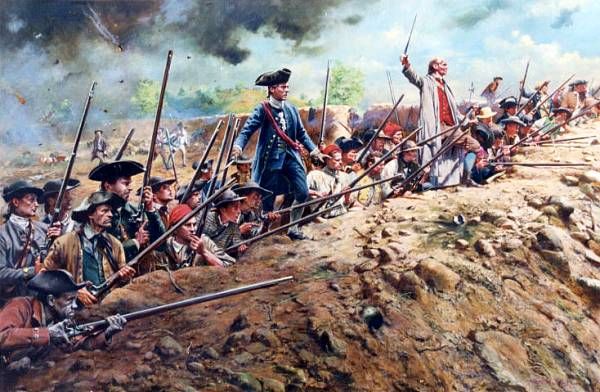
The conviction that the English colonial policies of the 1760s and 1770s constituted a conspiracy to enslave America played a major role in the outbreak of the American Revolution.

American Conspiracy Theories

Beginning around 1763, a series of political conflicts between England and its American colonies prompted American critics to protest in conspiracy-minded rhetoric. The call in 1763 of some Anglican leaders to install a bishop in America was met in Massachusetts with angry protests that this amounted to an ecclesiastical conspiracy to destroy religious freedom. Two years later, the Stamp Act of 1765 shocked and baffled many colonists.

The measure called for a stamp tax on all paper used for purposes ranging from wills to playing cards, without consultation of or ratification by the colonial assemblies. While many colonists were still willing to concede Parliament the right to raise money from the colonies, the heavy-handed measure trampled American traditions of self-government and cherished concepts of representation and liberty.


Already several critics charged that this could only be an early step in a larger plan designed by schemers within the English government in order to destroy the rights of Englishmen in America. Some even felt that the Stamp Act’s real goal was to foment a rebellion in America, which would subsequently be crushed militarily and allow a despotic government to be installed.

Even though the Stamp Act was repealed in 1766 as a result of colonial protests, the crisis was soon continued by the passage of the Town-shend duties in 1767, which continued other forms of taxation.

Colonial critics became more and more convinced that the successive crises were not the result of a misunderstanding or a normal political conflict over negotiable interests, but were deliberately designed by a powerful group in the English government in order to bring America to its knees.

Their suspicions were furthered through the controversy surrounding John Wilkes, a radical English opposition leader, whose election to Parliament was widely applauded in the American colonies. However, Wilkes was imprisoned and repeatedly denied his seat in the House of Commons, while a riot of some of his followers was met with gunfire that killed several.

When troops stationed in Boston shot several protesters in the so called Boston Massacre in 1770, colonial critics drew a parallel and concluded that opposition voices both in England and in the colonies were being permanently silenced.

Things came to a head when, in reaction to the Boston Tea Party of 1773, Parliament passed the Coercive Acts in order to discipline Massachusetts. These measures were widely called the Intolerable Acts and interpreted as a deliberate effort to choke the colonies economically, abolish the rule of law and trial by jury, and prepare the American colonies for direct despotic rule.

By 1774 many prominent and moderate colonial leaders including Thomas Jefferson, George Washington, George Mason, and John Dickinson, were convinced that English policies were deliberately designed to end political freedom in America.

The Continental Congress itself endorsed such an interpretation in its 1774 Declaration of Rights and Grievances, which vehemently protested against “such acts and measures as have been adopted since the last war, which demonstrate a system formed to enslave America.”

Shortly thereafter, the first shots of the Revolutionary War were fired, and in 1776 the American states declared their independence, arguing that a “long train of abuses and usurpations, pursuing invariably the same object, evinces a design to reduce them to absolute despotism.”

Who were the alleged conspirators? John Adams and Josiah Quincy identified Thomas Hutchinson, the governor of Massachusetts as a focal point of the conspiracy. Quincy even accused Hutchinson of being the originator of all the measures against America, but most conspiracy-minded critics felt that colonial officials could at best be the pawns of much more powerful figures in England.

The person most often identified as the source of the troubles for both the colonies and England was John Stuart, Earl of Bute, prime minister from 1762 to 1763, the former tutor of young George III, and the alleged lover of the dowager Princess Augusta.

The conspiracy theory argued that Bute, even though he had to leave office in 1763 under public pressure, had used his influence on the king to form a secret party that in reality controlled appointments to office as well as the general policy of Great Britain; he had also used his power to get even with his old enemy John Wilkes. Subjecting the American colonies to despotic rule was only the first step in doing the same thing in England.

English Conspiracy Theories

Such views were not limited to America. In England, too, a number of prominent intellectuals and politicians asked themselves why the country was in such turmoil despite the fact that it had just won the Seven Years’ War and faced no devastating problems. Whether sympathetic to or contemptuous of the American colonies, these thinkers identified similar causes for the troubles. Horace Walpole subscribed to the Earl of Bute theory.

Edmund Burke, in his 1770 essay “Thoughts on the Cause of the Present Discontents,” also argued that a hidden faction, a “double cabinet,” pulled the strings in Great Britain. William Pitt, the veteran politician and steadfast ally of the American colonies, looked toward the intrigues of rich merchants involved in the Asia trade for the source of government corruption.

Of course, not all conspiracy theories in England ran parallel to those in America. One very popular explanation of the crisis vis-à-vis the American colonies was that from at least 1760 onward, a group of American conspirators had, for their own profit and aggrandizement, purposefully orchestrated events with the treasonous goal of independence in mind. Proponents of this conspiracy theory included Francis Bernard, the governor of Massachusetts from 1760 to 1769, as well as his successor Thomas Hutchinson.

In fact, this interpretation won the highest endorsement possible from George III himself, who in 1775 informed Parliament: “The authors and promoters of this desperate conspiracy have in the conduct of it derived great advantage from the difference of our intentions and theirs. They meant only to amuse, by vague expressions of attachment to the parent state and the strongest protestations of loyalty to me, whilst they were preparing for a general revolt”.

In late 1775, the king’s statement was probably right: the colonies were headed almost inexorably toward independence. But in the 1760s and the early 1770s, attachment to the crown was still strong in America. There was no premeditated plan to bring about independence through a series of escalating crises, as George III and others charged.

Likewise, there was no coherent plot to abolish liberty in the American colonies. To be sure, prime ministers from George Grenville onward certainly wanted to set a precedent of taxation in the colonies. Most leading politicians were either ignorant or contemptuous of traditions of self-government in the colonies.

The king and most parliamentary leaders wanted to reorganize the empire into a more coherent system, and thus had no intention of returning to the era of salutary neglect. Nevertheless, the taxation and reform measures of the 1760s and 1770s had limited and specific purposes; they did not constitute a deliberate design to destroy the rights of Englishmen.

Rather, the American Revolution can best be understood as a series of conflicts and misunderstandings, during which the political differences between England and its colonies became ever clearer, and the stakes ever higher, to the point where a fullscale revolution was the result.

Nevertheless, the ubiquity of conspiracy-minded explanations for the American Revolution is startling, but explainable. Theories of political conspiracy were a staple of eighteenth-century British political discourse, and preceded the American Revolution. English radicals often charged that a secret faction had formed a ministerial conspiracy that worked toward the consolidation of power and the subversion of traditional English liberties.

Much of the political theory of the Real Whig tradition in England was geared toward a general attitude of suspicion, lest liberty be destroyed by designing men. In fact, most contemporary observers expected conspiracy and corruption to seep into any political system, even the revered English constitution; only through constant vigilance could such decay be prevented or at least delayed.

At the same time, eighteenth-century philosophy was built on the premise that all effects had specific and identifiable causes. In the case of political effects, these causes were expected to lie with individual intentions, not abstract social forces or uncontrollable political dynamics.

So if the colonists perceived negative effects from English policies, while at the same time Parliament asserted that they had the empire’s best interest at heart, the colonists interpreted this discrepancy as the deliberate deception of a malevolent conspiracy. Conspiracy theorists on both sides simply interpreted events in the political and intellectual framework of their time.

Anarchists

Anarchists logo
Anarchists logo

Anarchism is a philosophy of social change that emerged as an international movement in the midnineteenth century and saw its heyday in the early twentieth century. The anarchist movement as a whole advocated the eradication of the state and believed that individuals would capably provide their own order.

The state, with its centralized mechanisms of control (whether socialist or democratic), was seen as inevitably coercive. In the United States the anarchist movement was interpreted as a leftist conspiracy to use aggression to eradicate law and order.

Labor union strikes, a series of assassinations of European monarchs carried out by anarchists, and the Bolshevik Revolution accelerated fears that the movement intended to induce worldwide uprisings and chaos. Within the movement, anarchists of various ideological persuasions promoted diverse methods of carrying out revolutionary activity. They supported actions ranging from peaceful protest, publications, and delivering speeches, to violence.


The philosophy gained appeal in the United States through opposition to the ills of industrialization. Many anarchists expressed concern over issues such as wage slavery, the suffering experienced by recent immigrants, war and conscription, and a perceived trampling of individual rights.

Anarchist figureheads sought especially to disseminate their message among the U.S. working classes. This activity was largely perceived by certain power structures—trusts, police, and government—as a threat to democracy in the United States.

Anarchism was increasingly seen as a monolithic leftist conspiracy: all anarchists were potential bomb throwers or assassins, and the ideology was interchangeably lumped together with communism and socialism. Although many anarchists, specifically anarcho-communists, adopted some Communist and socialist principles, anarchist values in many ways clashed with these ideas (particularly the idea of the state as purveyor of social and economic organization).

In the wake of the Haymarket affair of 1886, anarchists in the United States were popularly portrayed as terrorists (Woodcock, 464). In his analysis of the anarchist movement published after the trial, Michael Schaack, captain of the Chicago Police, argued that: Let none mistake either the purpose or the devotion of these fanatics, nor their growing strength.

This is methodic—not a haphazard conspiracy. The ferment in Russia is controlled by the same heads and the same hands as the activity in Chicago. There is a cold-blooded, calculating purpose behind this revolt, manipulating every part of it, the world over, to a common and ruinous end.

The men executed in connection with the Haymarket bombing had no direct involvement with the incident, and became martyrs for U.S. anarchists, inspiring many important people in the movement’s history to become actively involved. Emma Goldman, for example, was arguably the most famous and influential anarchist figure in twentieth-century America (Avrich, 165).

Many U.S. anarchists were immigrants and suffered prejudicial treatment as a result. This was particularly evident during the “red scare” of 1919–1920, when anarchists were deported under the 1918 Immigration Act (Morton, 98). It was also in this sociopolitical climate that Italian American anarchists Nicola Sacco and Bartolomeo Vanzetti were tried and executed for murder in a controversial and, many believed, unfair trial.

Fears of an anarchist conspiracy were justifiable in some respects. Anarchists openly preached revolution through anarchist newspapers, books, lectures, and through affiliations with labor groups such as the Industrial Workers of the World (IWW). Johann Most advocated attentat—“propaganda-by-the-deed”—and published instructions for making bombs, encouraging their use to spark revolt.

Alexander Berkman, an influential figure in the movement, attempted to assassinate Henry Clay Frick because of Frick’s handling of the Homestead Strike of 1892, during which Carnegie steel mill workers were shot. A drifter who claimed that he was an anarchist assassinated popular president William McKinley in 1901.

However, violent deeds were carried out independently and caused controversy even within the anarchist movement among those who advocated violence as a justifiable means of bringing about the revolution, and those who denounced violent acts as unjustifiable under any circumstances.

Emma Goldman expressed sympathy for both McKinley’s assassin and Berkman, publicly acknowledging their actions as desperate responses to an oppressive system. Following McKinley’s assassination, foreign anarchists were legally prohibited from entering the United States.

Anti-Catholicism

An anti-Catholic cartoon shows Archbishop Francesco Satolli in 1894, casting an evil shadow across the country.
Anti-Catholicism

Anti-Catholicism constituted one of the nation’s earliest and most virulent conspiratorial fears. It continues to linger in the very heart of U.S. popular culture, appearing in radio, television, music, and now on the Internet. Based in the eighteenth and nineteenth centuries on Rome’s supposed political power, antipathy toward Roman Catholicism has since the 1960s insisted that Catholicism threatens the most basic tenet of U.S. identity: the personal freedom of the individual.

Roman Catholicism represents the perpetual “Other” whose very mysteriousness and difference maintains a certain distance from U.S. life. Over the centuries this distance has exhibited a rather protean nature to where “anti-Catholicism” serves as a canvas on which non-Catholic Americans paint their hostilities. During the colonial period, anti-Catholicism continued on U.S. soil religious and political conflicts that began in Europe.

During the antebellum period, anti-Catholicism represented the epitome of mental and physical slavery that social reform movements sought to undo, much like their crusades for temperance and slavery abolition. Catholicism’s ready identity with different ethnic groups—Irish and German at first, then Italians, Poles, and French-Canadians after the Civil War—underlined the Church’s inherent foreign character.


During World War I Catholicism appeared to many Americans as a traitorous community in their midst. Only with John Kennedy’s successful presidential campaign in 1960 did anti-Catholicism shift to more individual concerns. Now Catholicism is viewed as the last religious tradition capable of inhibiting the personal growth and self-awareness of many Americans.

According to this view, Catholics, despite whatever claims they might make about their Americanness, harbor a hidden agenda that they seek to impose on all other Americans. Historian Arthur Schlesinger, Sr., once remarked that anti-Catholicism was “the only remaining acceptable prejudice.”

Schlesinger pointed his comment toward the nation’s educated elite, but the point could be extended much further. The idea that Roman Catholicism represents a threat to U.S. culture has taken many forms, including a few by Catholics themselves. Mistrust and fear of Catholicism’s hierarchical structures and theological positions continue to animate U.S. life.

Roots in Protestantism and English Puritanism

Animosity toward Roman Catholicism is deeply rooted in the history of western Europe as well as that of Christian thought. The apocalyptic imagery of the “Whore of Babylon” in the Book of Revelation points toward the city of Rome itself.

While early Christianity read Revelation as a coded text against pagan Rome, the generations that followed often understood the Scriptures as leveling divine judgment against Christian Rome as well. Rome’s spiritual tyranny over Christians enjoyed demonic, not heavenly, support. English Puritanism took the argument even further.

Seeking to purify the Church of England of anything remotely Catholic, anti-Roman animosity became a measure of one’s faith. In other words, resistance to Roman Catholicism constituted a bedrock duty of all real English Christians. The martyrdom of English Protestants during the reign of Queen Mary (reigned 1553–1558) foretold the future if Catholics achieved power.

Elizabethan Puritanism held that Catholicism constituted a threat to English politics as well as the nation’s spiritual climate. The Spanish Armada, the Gunpowder Plot, and later the Jacobite uprisings indicated that Catholics seeking the throne also sought to return England, through force if necessary, to Rome.

Colonial Expressions

The English colonies in the New World reflected these conflicts with Catholic powers. Consequently, many colonies possessed legislation that limited worship opportunities and sometimes voting rights for Catholics.

Some, such as Massachusetts, threatened death by hanging to anyone revealed as a Catholic priest, and even though Maryland was founded as a haven for Catholics, it quickly came under Anglican control, too. English Protestant colonists felt surrounded by Catholic colonial powers France and Spain. They therefore sought to ensure that their own spaces were utterly free of any Catholic contagion.

Fear of the Immigrant in the Nineteenth Century

The disease metaphor became quite popular during the nineteenth century, for Roman Catholicism appeared as metastasizing tumor. Waves of immigrants from Germany and Ireland beginning in the 1820s accelerated the growth of the Catholic Church.

While internally the Church faced growing ethnic conflicts (e.g., German parishes occasionally refused the English-speaking Irish priest assigned them by an Irish bishop), non-Catholic Americans perceived Roman Catholicism as a foreign monolith poised to overthrow the young nation’s democratic system.

It seemed that Catholicism was assuredly un-American. The Church lacked democratic procedures for acknowledging authority, its worship practices seemed clearly at odds with scriptural guidelines, it had attempted the forcible reconversion of Protestants, and its members in the United States were almost entirely nonnative immigrants.

Consequently, anti-Catholics acquired the label “nativists” for their insistence that the foreign-born could not claim to be Americans. Since the Catholic hierarchy often established parishes with specific national identities (e.g., naming parishes after a nation’s patron saint, such as St. Patrick), Catholicism seemed to prevent its members from “Americanizing” completely.

The Americanization issue continued to pester Catholic leaders through the nineteenth century. After the Civil War, immigration shifted from western Europe to southern and eastern Europe. Catholics from these regions— Italians, Portugese, Poles, Slavs, and French-Canadians from Quebec—appeared to be even more resistant to Americanization than the Germans and Irish.

Beyond the immigration issues, Catholicism posed a significant question to U.S. identity. If the nation became filled primarily with Christians belonging to a foreign faith (since the pope, ensconced at Rome, controlled Catholicism), what would become of U.S. institutions like democracy, free enterprise, and freedom of worship? The nativist response took two paths: political opposition and popular culture. Both paths took inspiration from the Puritan slogan “No Popery.”

The Order of the Star-Spangled Banner, better known as the “Know-Nothing” Party because when asked about their political activities they claimed to “know nothing,” sought to elect candidates to local, state, and national offices who would ensure that the United States remained a Protestant and democratic country.

In 1852 Know-Nothings won election victories nationwide, especially in Massachusetts where the governor and all higher commonwealth officials were affiliated. Know-Nothings diluted some of their political power by joining larger national parties such as the Republicans.

Similarly, social reformers interested in abolishing southern slavery and the liquor trade often regarded Catholicism as the epitome of enslavement, suscribing to the view that being Catholic subjected one to physical as well as spiritual slavery. Many Catholics, it was felt, particularly the Irish, seemed unable to turn away from liquor’s appeal.

Reforming U.S. life began, therefore, with opposition to the further growth of Roman Catholicism. Another battleground was the public school system. In the early 1840s, following the complaints of Catholic parents, New York Protestants joined forces to ensure that public schools continued teaching with the King James Version of the Bible.

The mysteriousness of Catholic convent life fostered one of the strongest anti-Catholic messages. Tales of “escaped nuns,” young women claiming that they had been abducted into convent life, proved wildly popular throughout the nation.

Some were published, the most popular of which was The Awful Disclosures of Maria Monk, a fictitious account of a young woman’s abduction into a Montreal convent. Many “escaped nun” tales featured the sexual depravity and rigid secrecy of the Catholic male clergy.

Not only did Catholicism threaten the nation’s political economy, individual Americans stood in danger of being the victim of Catholic “press-gangs” hell-bent on increasing the Church’s membership. In the 1840s a lecture circuit featuring Monk and other escaped nuns, as well as theatrical plays, developed the theme.

As a result, the arrival of Catholic immigrants occasionally resulted in violence. Lyman Beecher’s 1835 “Plea for the West,” a speech in which he claimed Catholics were settling western lands far faster than Protestants and thus threatened to cut off U.S. expansion, resulted in a mob burning an Ursuline convent in Charlestown, Massachusetts.

In 1844 Philadelphia nativists rioted following rumors that local Catholic parishes were stockpiling weapons for possible rebellious activity. Thirteen people died and over fifty were wounded in the violence. Violence threatened in St. Louis and New York, but did not materialize.

The Civil War offered a respite from anti-Catholic attitudes, as Catholics served in both armies (notably Union general Philip Sheridan) and religious sisters served in medical roles. Even then northern nativists questioned Catholic loyalty when, in 1863, large numbers of Irish immigrants participated in violent draft riots in New York City.

Political cartoonist Thomas Nash captured the anti-Catholic message in an 1871 Harper’s Weekly drawing. It depicted Catholic bishops as aggressive alligators coming ashore to attack Protestant America, suggesting that Tammany Hall was a new Vatican and that Irish immigrant politicians threatened to dismantle public schools.

During the 1880s and 1890s, the American Protective Association (APA) resurrected the Know-Nothing cause. Predominantly located in the Midwest, the APA utilized the same rhetoric but failed to generate the same interest.

It did succeed in casting suspicion on emerging labor unions, often filled with and led by Catholics, and other radical political movements. In the 1880s and 1890s nativist politicians, particularly within the Republican Party, sought to curtail immigration to limit increasing Catholic power in urban areas.

Scientific racism informed these efforts, “proving” that Anglo-Saxons—who were overwhelmingly Protestant—enjoyed biological as well as cultural and religious superiority over the newer Catholic immigrants. Immigration restriction continued to be an issue until Congress established strict limits, aimed primarily at immigrants from Catholic and Jewish areas of eastern and southern Europe, in the Johnson-Reed Act of 1924.

The Ku Klux Klan in the 1920s

The Ku Klux Klan reemerged in 1915 as the primary vehicle for anti-Catholic nativism. By the early 1920s, the Klan had become popular across the nation. Committed to “100 percent Americanism,” the Klan sought to limit the powers of the now well-established Catholic community.

Klan recruiters pursued Protestant clergy, and the Klan moved to reinforce its view of traditional U.S. morality. This included supporting Prohibition, segregation, Protestant-oriented public schools, strikebusting, and boycotting Catholic (and Jewish) businesses.

Significantly, this incarnation of the Klan saw the largest membership numbers, and the 1920s Klan enjoyed national, not merely southern, popularity. Klan voters helped elect sympathetic politicians and passed anti-Catholic measures in Maine, Indiana, and Oregon, as well as other states. Klansmen fought with Catholic groups in workingclass urban neighborhoods in Ohio, New Jersey, and Illinois.

The Klan resurrected stories of “captured nuns” like Maria Monk. It also circulated a fictitious oath—much like Protocols of the Elders of Zion—purportedly taken by the Knights of Columbus wherein they pledged to murder Protestant babies and undermine the Protestant political establishment.

However, the Klan’s popularity quickly shrank after scandals emerged concerning Klan leadership, especially Indiana’s grand dragon, David C. Stephenson. The Klan enjoyed a minirevival during the 1928 presidential election, stirring up opposition to the Democratic candidate, New York’s Catholic and anti-Prohibition governor, Alfred E. Smith.

Contemporary Expressions

With the 1925 Scopes trial in Tennessee, evangelical Protestantism shrank away from public scrutiny, thus silencing an important source of anti-Catholic rhetoric. Evangelical opposition to Catholicism remains to this day, but never incites the same level of popular support.

The Second Vatican Council (1962–1965), which inaugurated landmark changes in Catholic liturgy and theology (especially concerning non-Catholics), indicated the Church’s new willingness to converse with, instead of repressing, other religious perspectives. The Catholic Church also expressed its appreciation of democratic political processes.

In this new situation, those advocating antiCatholic views, ironically, have often spoken from liberal, not conservative, perspectives. Paul Blanshard’s wildly popular Catholic Power and American Democracy (published in 1948) expressed the point quite clearly: Catholics voted according to clerical direction, instead of individual decision, and this threatened U.S. democratic institutions.

Through utterly democratic processes, the Catholic Church could mobilize its members to limit the religious and political freedoms of other Americans. Although he had studied to be a Congregational minister, Blanshard affiliated himself more closely with secular humanist groups. He believed his argument was nonsectarian since it applied to the political freedoms of all Americans.

Blanshard’s work received praise from mainstream newspapers as well as from leading academics, such as John Dewey. This recalled the antebellum social reformers who feared Catholicism’s social and political influences, not its theological foundations.

Blanshard’s legacy resurfaced in the 1970s and 1980s when Vatican authorities silenced American Catholic academics such as moral theologian Charles Curran. Catholic threats to personal freedom, especially concerning sexuality, have been explored in U.S. popular culture, ranging from the videos of the singer Madonna to television shows such as Ally McBeal. Much like Blanshard’s earlier work, these receive far less criticism from Protestants than from Catholics.

The latest expressions of anti-Catholicism use widely accessible language and assumptions to question the Church’s (and individual Catholics’) views on abortion, sexuality, and personal freedom. The hysterical fears of Maria Monk might have faded, but there remains a sense that Catholicism, much like Nash’s cartoon, threatens to overwhelm freedoms and values that non-Catholic Americans hold dear.

Anti-Federalists

Anti-Federalists
Anti-Federalists

The United States was founded on conspiracy theories. Whiggish colonists started a revolution convinced that unscrupulous British ministers were deliberately undermining traditional English liberties. With independence secured, liberty was again threatened in 1787–1788, this time from within.

An urban, largely commercial group, known as the Federalists, were conspiring to further their own pecuniary interests and enforce domestic tranquility by creating a new constitution in secret session. The Anti-Federalists, their opponents, used a common U.S. idiom—the conspiracy theory—to articulate their defense of decentralized government.

The Anti-Federalists were a loose collection of usually small-scale farmers and paper-money advocates who were generally suspicious of financiers, lawyers, merchants, and powerful landowners.


They were strongest in rural areas and in the largest and most influential states: Massachusetts, New York, Pennsylvania, and Virginia. It was from those states that they drew their most able partisans: Sam Adams, James Warren, George Clinton, George Mason, Samuel Bryan, Patrick Henry, and Richard Henry Lee.

There was no organized AntiFederalism in the way that the Constitution was written in committee or that Alexander Hamilton, James Madison, and John Jay co-wrote the Federalist Papers. Instead, they represented a common American belief that what they called “consolidated government” (and modern Americans call “big government”) followed the interests of the elite at the expense of the common man.

Intellectual Context

Americans inherited several predominantly English intellectual traditions that made conspiracy theories an intrinsic part of the rhetoric of early American political discourse. The radical Whigs of seventeenth- and eighteenth-century England suspected the crown and its advisers of perpetually scheming to undermine English liberties.

Moral philosophy, a product of the Enlightenment that sought to explain human interactions mechanistically, made humans directly responsible for all events, no matter how complex. Any unpopular act of Parliament or a provincial assembly, order of the king, or action of a provincial governor, regardless of how benignly or rationally conceived, could therefore be attributed to sinister motives. Religion also contributed to the matrix.

The dissenting Protestantism of most colonists inculcated in many a watchfulness of their religious liberties—liberties that had been denied their fathers and brethren in England and on the European continent. All these made the colonists, as they put it, “jealous of”— that is, protective of, suspiciously watchful for— their liberties. In the greatest sustained debate in U.S. history, Anti-Federalists drew heavily on this intellectual heritage.

They cited repeatedly the French philosopher Baron de Montesquieu, who insisted that republics could only be small. Anonymous Anti-Federalist essayists styled themselves “Cato,” “Algernon Sydney,” or “Brutus,” who slew the tyrannical Julius Caesar. Others wrote under names glorifying ordinary Americans: “A Federal Farmer,” “A Countryman,” or “An Officer of the Late Continental Army.”

Constitutional Conspiracy

The drafting and debating of the Constitution in 1787–1788 did little to convince the Anti-Federalists of the opposition’s virtues. Two New York delegates to the Constitutional Convention walked out, protesting that the Convention would not revise the Articles of Confederation as it was so summoned, but would create a new constitution.

The New York Anti-Federalist polemicist Cato complained that these now dubious proceedings had taken place behind closed doors. Prominent AntiFederalists complained of a suddenly dismal mail service. Newspaper editors, overwhelmingly Federalists, left Anti-Federalist editorials or rebuttals on press-room floors or grossly misrepresented opposition views.

The prominent Pennsylvania Gazette reported that Virginia Anti-Federalist and Revolutionary War statesman Patrick Henry was working for ratification. The Federalist New-Hampshire Spy told a heavily Anti-Federalist state that nary an opponent of the Constitution existed in all of New England.

The questionable manner in which the Constitution was born and the misrepresentation of its support inevitably led some Americans to doubt the beneficent motives of its authors. Anti-Federalists often concluded that the Constitution had been drafted to fashion a government run by the elite to enslave the common folk.

The “Federal Farmer” of Pennsylvania saw in the Constitution a monarchy waiting to happen because so many of the wealthy were believed to be secretly attached to the principles of monarchy and aristocracy. George Mason of Virginia, the most intelligent and respected of the Anti-Federalists, predicted in a widely circulated pamphlet that a government under the proposed Constitution would waver between aristocracy and monarchy, finally culminating in one or the other.

Anti-Federalist Objections

The source of Anti-Federal apprehension was the fear of centralized authority. The new Constitution seemed to many Anti-Federalists a throwback to its colonial past with an unresponsive king, locally irresponsible provincial governors, and an unrepresentative Parliament that taxed at will. The Federalists proposed a national constitution that would supersede the individual state constitutions, which hitherto had been the equals of the Articles of Confederation.

The implications of ending a truly federal system seemed ominous. “Brutus” of New York, the ablest of the Anti-Federalist theorists, worried that under the “necessary and proper” clause of Section 8, article 1 of the proposed Constitution, congress would possess absolute power and consolidate all state governments into one executive, legislature, and judiciary.

Nothing could prevent an aggrandizing national government from destroying civil liberties. The three branches of the proposed government would invariably function as a de facto aristocracy and monopolize power. Where Federalists saw checks and balances, Anti-Federalists foresaw juntas destroying public liberties.

The executive, without term limits, with appointment, pardon, and veto powers, and in control of the military, would become an unrestrained “President-General” in league with the long-tenured Senate. Together, they would make war and peace as they saw fit, usurping national and state laws with international treaties.

The House of Representatives, the most democratic feature of the new Constitution, was hardly representative enough for most Anti-Federalists, as only the elite would serve here. And the Supreme Court, appointed by the president and confirmed by the Senate, would be composed of judges beholden to their benefactors, interpreting laws and treaties accordingly.

As the Constitution said nothing about preserving English common law, the courts would no longer check legislative and executive excesses, the “Federal Farmer” warned, but would now be part of them. A small coterie of like-minded men would make, interpret, and enforce the laws. Several Anti-Federalists remarked that so much power had been granted to the rulers in the proposed Constitution that there was no need for the ambitious to seize more.

The Anti-Federalists also assumed that republics could only exist on a small scale. It was a lesson of history that republics must be near the people, where local interests were closely guarded and local justice properly administered. Partly this was a sectional issue.

How could a Virginian determine the interests of a New Yorker? Would not the more populous, urban, commercial North dominate the new government and enact policies to the detriment of the agrarian, slave holding South? The problem of a consolidated national government making uniform immigration laws was obvious, even among northern states.

James Winthrop of Massachusetts, writing under the pseudonym Agrippa, found his state moral, pious, manly, and prosperous because of its long-standing restrictions on immigration. Impious and immoral Pennsylvania, conversely, had traded piety for prosperity by allowing anyone to emigrate. A distant, unrepresentative government was hardly preferred over provincialism.

Bill of Rights

Despite these serious protestations against the proposed Constitution, some Anti-Federalist fears could be assuaged with a bill of rights guaranteeing civil liberties and states’ rights. Here was the great contribution of Anti-Federalist conspiracy concerns.

Ever jealous to protect their rights and the rights of state governments, they made it clear in numerous essays, letters, and speeches that some basic protection of the natural rights of citizens had to be included in any constitution for it to be accepted. Nothing in the proposed constitution guaranteed, among other things, freedom of religion, the press, and arms; trial by jury; and the reservation to the states of all unenumerated powers.

Failure to include such provisions convinced most Anti-Federalists that their counterparts were conspiring to wreck democracy. In the end, the Constitution was ratified because Federalists promised that the first Congress under the new plan would take up the business of adding a bill of rights to the new Constitution.

Enough Anti-Federalists— barely enough in key states like New York, Massachusetts, and Virginia—took them at their word. The new Constitution was ratified by the necessary nine of the thirteen state legislatures by July 1788. The Bill of Rights—the first ten amendments, the product of conspiratorial warnings—was added four years later.

Anti-Masonic Party

Anti-Masonic almanac

Following the American Revolution, some critics began to voice their suspicions of Freemasonry as a secret society, and these concerns eventually led to the formation of the Anti-Masonic Party in the late 1820s.

Modern Freemasonry began in 1717 in England as a social organization built on the ancient traditions of the medieval masons’ guild. It developed its own social hierarchy, with a complex system of lodges, titles, and rituals, and within a few years it began to spread abroad, coming to America by 1730.

Over the next century, its aims of social camaraderie and moral education attracted a largely middle-class membership in America that eventually numbered in the tens of thousands, including such luminaries as Benjamin Franklin, George Washington, and other political and military leaders of the day.


However, in the later eighteenth century critics voiced concerns about its overtly English origins, and its use of grandiose titles (which was said to smack of discredited European aristocracy). Especially suspect was its strict code of secrecy, which was claimed to be enforced by the threat of a brutal death and to be nothing less than a cover for a foreign plot and moral debauchery.

After the French Revolution, many Americans became alarmed over the excesses of the new French government and its seeming rejection of the religious establishment, and paranoia over supposed ties between Freemasonry and France superseded earlier doubts about the society’s English origins.

In 1798, the Reverend Jedidiah Morse, a conservative Massachusetts pastor opposed to French ideas, delivered a sermon that linked Freemasonry to the evils of the French Revolution by way of a conspiracy theory that a secret society of Illuminated Masons, or Illuminati, had been formed in Germany to overthrow the institutions of government and church, and that Freemasonry was a secret society working to spread that subversion to the United States.

Since some members of his own congregation were Masons, Morse was careful to distinguish between good and bad Masons, as did later anti-Masons, but the idea that their fellow citizens were part of a foreign plot proved hard to swallow for most Americans. Although the clamor over the Illuminati conspiracy did not last long, it did serve as a precursor to the more pronounced outbreak of anti-Masonry yet to come.

The event that led directly to the creation of the Anti-Masonic Party was the abduction and apparent murder in 1826 of Captain William Morgan of Batavia, New York. Having announced his plans to publish a book that would expose the secrets of Freemasonry, Morgan was seized by parties unknown and taken to Fort Niagara.

From there he disappeared forever, and the later discovery of a body fed speculation that he had been murdered, although the body could not be positively identified as his. When those suspected of foul play went on trial, they were exonerated or given light sentences, inspiring a number of anti-Masonic groups to conduct their own private inquiries.

A conspiracy theory about Morgan’s demise was formulated and widely distributed, including claims that prominent Masons had abducted and murdered him and, through their social and political influence, allowed the guilty parties to avoid punishment for the crime and induced the press to remain silent about the true facts of the case.

An anti-Masonic social movement quickly sprang up, first in New York and then in other northeastern states, and attracted members especially from the agricultural classes, who mistrusted the largely middle-class Masons, and among church members who saw Freemasonry as a rival to organized religion.

The anti-Masons especially objected to the secrecy practiced by Freemasonry, arguing that it was incompatible with democratic principles and served as a shield for the various illegal acts and outrageous plots of which Masons were suspected. Thus was born the first of a succession of nativist movements that spread through the United States in the nineteenth century, each with its own brand of prejudice.

Having emerged as the first widespread social movement in the history of the United States, anti-Masonry transformed itself into the first of America’s third parties as it attracted support from those who were politically opposed to President Andrew Jackson, a Mason.

Among the leading anti-Masons in New York were Thurlow Weed, a journalist who took over the editorship of the Anti-Masonic Enquirer in 1829, and William Seward, who would later become Abraham Lincoln’s secretary of state.

Anti-Masons started their own newspapers, organized local and state societies, and in 1832 ran their own candidate, William Wirt, for president of the United States against Andrew Jackson and Henry Clay, also a prominent Mason. A former U.S. attorney general, Wirt doubted that Clay could win, and hoped that his own candidacy would unite the opponents of Jackson, but in the Electoral College he succeeded in carrying only the state of Vermont, where the anti-Masons established themselves as the largest political party.

A quarter of New Englanders voted anti-Masonic, but the poor national showing of the anti-Masons in the election of 1832 led to their rapid deterioration as a movement. Some of their younger leaders, Weed and Seward among them, joined the new Whig Party and eventually went on to become prominent members of the Republican Party, where a moral fervor against slavery substituted for their earlier antipathy to Freemasonry.

The anti-Masons provided a model, flawed as it was, for those who would cast suspicion on secret societies, and in the mysterious fate of William Morgan they found inspiration for a complex conspiracy theory that could bear comparison with those surrounding U.S. political assassinations of the late twentieth century; but for all their efforts, they did little to endanger the existence of Freemasonry.